
Learning Centre
Bi-Fold, Sliding, or Sectional: Choosing the Right Large-Opening Door for Your Facility
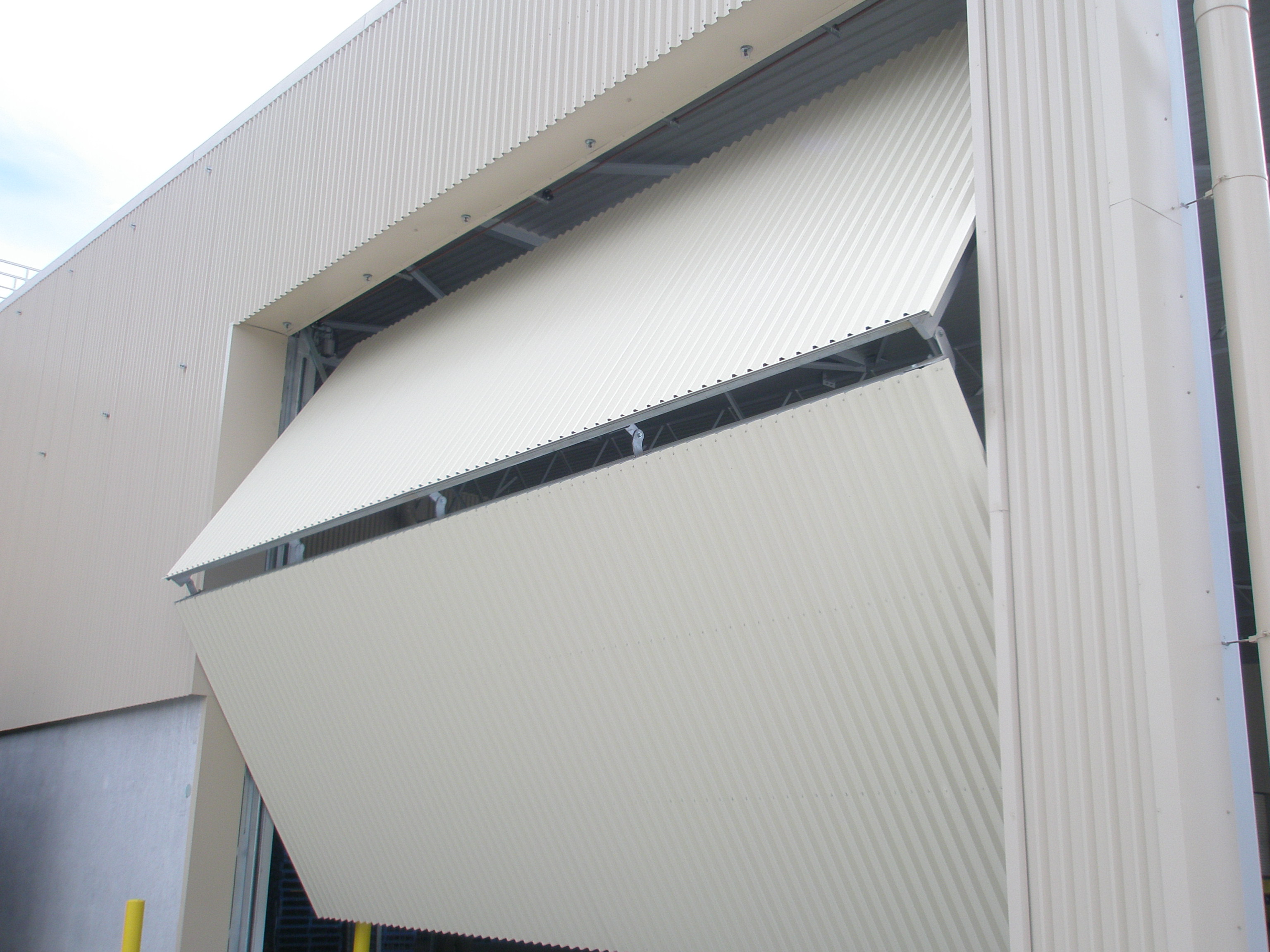
.jpg)
Alright, let's talk big doors! If you're a facility manager, builder, or business owner in New Zealand staring down a massive opening and wondering which door will fit the bill, you're in the right place. Choosing the perfect large opening industrial doors can feel like a huge decision, especially when weighing up bi-fold vs sliding vs sectional doors.
Here is the quick takeaway: it comes down to headroom, opening width, and how often the door opens and closes. Bi-fold doors are fantastic if you're short on overhead space; sliding doors are your go-to for super wide, high-traffic areas; and sectional doors are champions for insulation and frequent use.
This guide breaks down how each type works, giving you a clear industrial door types’ comparison so you can confidently pick the right commercial garage doors for your warehouse, hangar, or commercial facility long before requesting a quote.
What Counts as a "Large-Opening" Door?
A "large-opening" door refers to an access point too wide or tall for a standard commercial garage door, typically spanning 4 metres or more in width. These doors are essential for warehouses, aircraft hangars, distribution centres, and large-span commercial buildings requiring unobstructed access for oversized vehicles, equipment, or goods.
How Bi-Fold Doors Work (and Where They Excel)
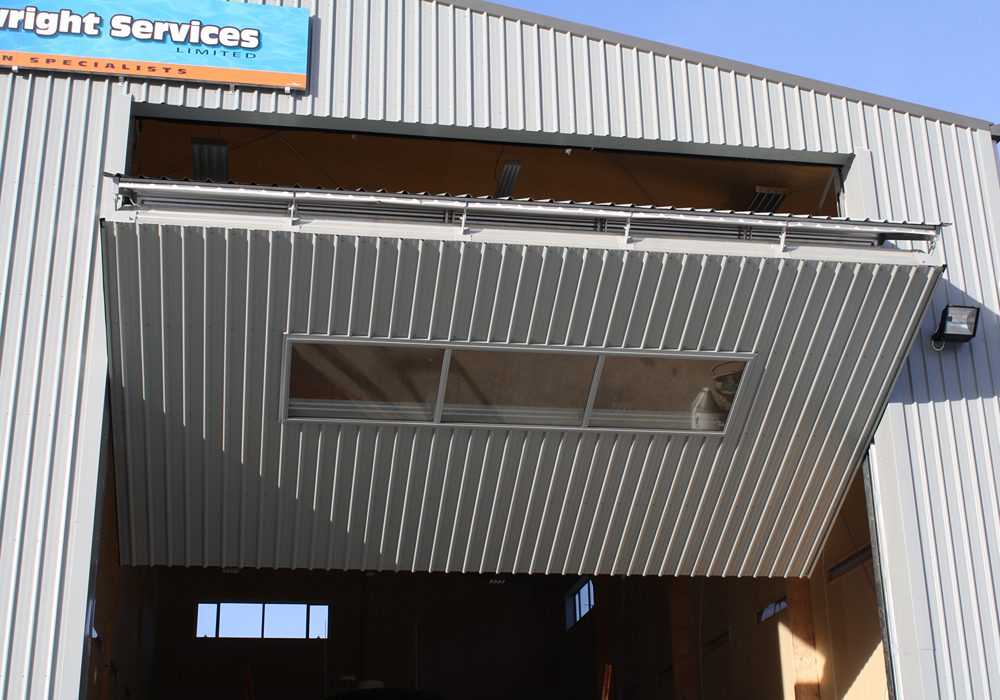
Bi-fold doors operate by folding upwards and outwards, stacking neatly above the opening. Because the panels fold in sections as they rise to create a canopy effect, they don't require the extensive interior headroom of vertically stacking doors.
They suit aircraft hangars, agricultural buildings, and industrial settings where wide, clear access is paramount but ceiling height is constrained. Glideaway offers Schweiss Strap-Lift Bi-Folding Doors, which utilise a strap system for quieter, smoother, and faster operation compared to traditional cables. Spanning over 17 metres wide, they are engineered to site-specific NZ wind requirements.
Best suited for:
- Aircraft hangars and aviation facilities.
- Buildings with limited headroom but ample side clearance.
- Architecturally driven projects seeking a clean look.
- Wide, clear openings without central posts.
How Sliding Doors Work (and Where They Excel)
Sliding doors travel horizontally along a track to one or both sides of the opening. This side-travel mechanism requires minimal to no headroom, making them excellent for low ceiling clearance or sites where overhead space holds equipment like cranes or lighting.
Their width is primarily limited by available side wall space. This makes them ideal for very large opening industrial doors in bays, ports, and warehouses handling heavy-vehicle or forklift traffic. Glideaway’s GDS Commercial Sliding Doors are custom-built with heavy-duty steel frames, offering bi-parting, side stacking, or "round the corner" configurations with complete weather seals for NZ conditions.
Best suited for:
- Extremely wide openings, such as large warehouse bays or hangars.
- Low headroom facilities or spaces needing clear overhead room.
- High-traffic areas requiring robust, reliable access.
.jpg)
How Sectional Doors Work (and Where They Excel)
Sectional doors consist of multiple panels hinged together running on vertical and horizontal tracks, stacking flat against the ceiling when open. This requires moderate to high headroom depending on track configuration.
A major advantage is superior insulation. With 42mm or 80mm thick insulated panel options, they provide excellent thermal and acoustic performance. This makes them the top choice for cold storage, food processing, or climate-controlled distribution centres. Glideaway's Insulated Industrial Sectional Doors feature durable panels engineered for high-frequency use and NZ wind zones.
Best suited for:
- Facilities requiring strict temperature control or acoustic insulation.
- High-frequency operations like busy distribution centres.
- Buildings with sufficient headroom for vertical panel stacking.
Bi-Fold vs. Sliding vs. Sectional: Quick Comparison
How to Choose the Right Door for Your Facility
Selecting the optimal door for your NZ facility involves a quick assessment:
- Available Headroom: Tight overhead space favors bi-fold or sliding doors.
- Side Clearance: Sliding doors require significant clear wall space alongside the opening.
- Cycle Frequency: High-frequency operations benefit from the robust mechanisms of sectional doors.
- Insulation Needs: Temperature-sensitive spaces require insulated sectional doors.
- Wind Zone Compliance: Ensure doors meet site-specific wind loads under NZS 4211:2008.
(For facilities with limited headroom and side clearance, Stacking Doors are a great alternative.)
Talk to Glideaway About Your Large Opening
Still unsure which door fits your operation? Glideaway is a family-owned, NZ-operated business with over 35 years of experience manufacturing and installing commercial garage doors and industrial access solutions nationwide.
Explore our full range of solutions in the Industrial & Commercial Doors hub.
Contact our team to arrange a professional, no-obligation site assessment.
Frequently Asked Questions
Which door type needs the least headroom?
Sliding and bi-fold doors need minimal headroom since neither stacks vertically; sectional doors require ceiling space for panels to travel overhead.
Can bi-fold or sliding doors be insulated?
Insulation options are more limited on bi-fold and sliding doors, making sectional doors preferred for cold storage and climate-controlled facilities.
What's the widest opening a sliding door can cover?
Sliding doors scale easily to wide openings, as width is mainly limited by available side wall space.
Are sectional doors suitable for high-frequency use?
Yes, sectional doors are best-suited for facilities opening and closing many times daily, such as distribution centres.
How do I know which door type is right for my building?
The right choice depends on headroom, side clearance, cycle frequency, and insulation needs. A site assessment from Glideaway is the best way to confirm.

Let’s talk garage doors.
Have a question or need advice? We’re here to help. Speak to our team about your project, and let’s find the perfect door to suit your site and style.